
Learning to drive is an exciting milestone, but it also comes with real responsibility.
For teen drivers and new drivers, every trip is part of the learning process. From navigating traffic to parking, changing lanes, driving at night, and handling unexpected situations, new drivers face challenges that experienced drivers may take for granted.
That is why many families consider installing a dash cam in a teen driver's car.
A dash cam cannot replace safe driving habits, proper training, or parental guidance. However, it can provide useful video evidence, encourage more responsible driving, and offer peace of mind for both new drivers and their families.
In this guide, we will explain what features to look for when choosing the best dash cam for teen drivers and new drivers.
Why Teen Drivers and New Drivers May Benefit From a Dash Cam
New drivers are still developing confidence, awareness, and decision-making skills behind the wheel.
A dash cam can help by recording important moments on the road, including:
-
Sudden braking
-
Lane changes
-
Parking lot incidents
-
Rear-end collisions
-
Hit-and-run accidents
-
Close calls with other vehicles
-
Road hazards
-
Night driving situations
For parents, dash cam footage can provide additional context if something happens.
For teen drivers, it can also be a useful learning tool. Reviewing footage together may help identify what went well and what could be improved.
1. Choose Front and Rear Recording
For teen drivers and new drivers, front and rear coverage is one of the most useful features.
A front-facing camera records what happens ahead of the vehicle.
A rear camera records what happens behind the vehicle.
Together, they can provide a more complete view of driving events.
Front and rear recording can be helpful for:
-
Rear-end collisions
-
Parking lot accidents
-
Tailgating
-
Lane-change incidents
-
Hit-and-run situations
-
Multi-vehicle accidents
Because new drivers may not always notice what is happening behind them, rear recording can add an important layer of protection. The Pelsee P1 Duo Dash Cam is a front-and-rear option worth considering for new drivers who want broader coverage.
2. Look for Clear Video Quality
Video clarity matters because dash cam footage is only useful if important details can be seen.
A good dash cam for new drivers should be able to capture:
-
License plates
-
Road signs
-
Traffic signals
-
Lane markings
-
Vehicle movement
-
Weather conditions
Higher-resolution dash cams, such as 2K or 4K models, can provide more detail than basic 1080p cameras.
For teen drivers, clearer footage may be especially helpful when reviewing driving situations or providing evidence after an incident. The Pelsee S3 Touch 4K Dash Cam offers high-resolution recording that can make license plates and road details easier to see.
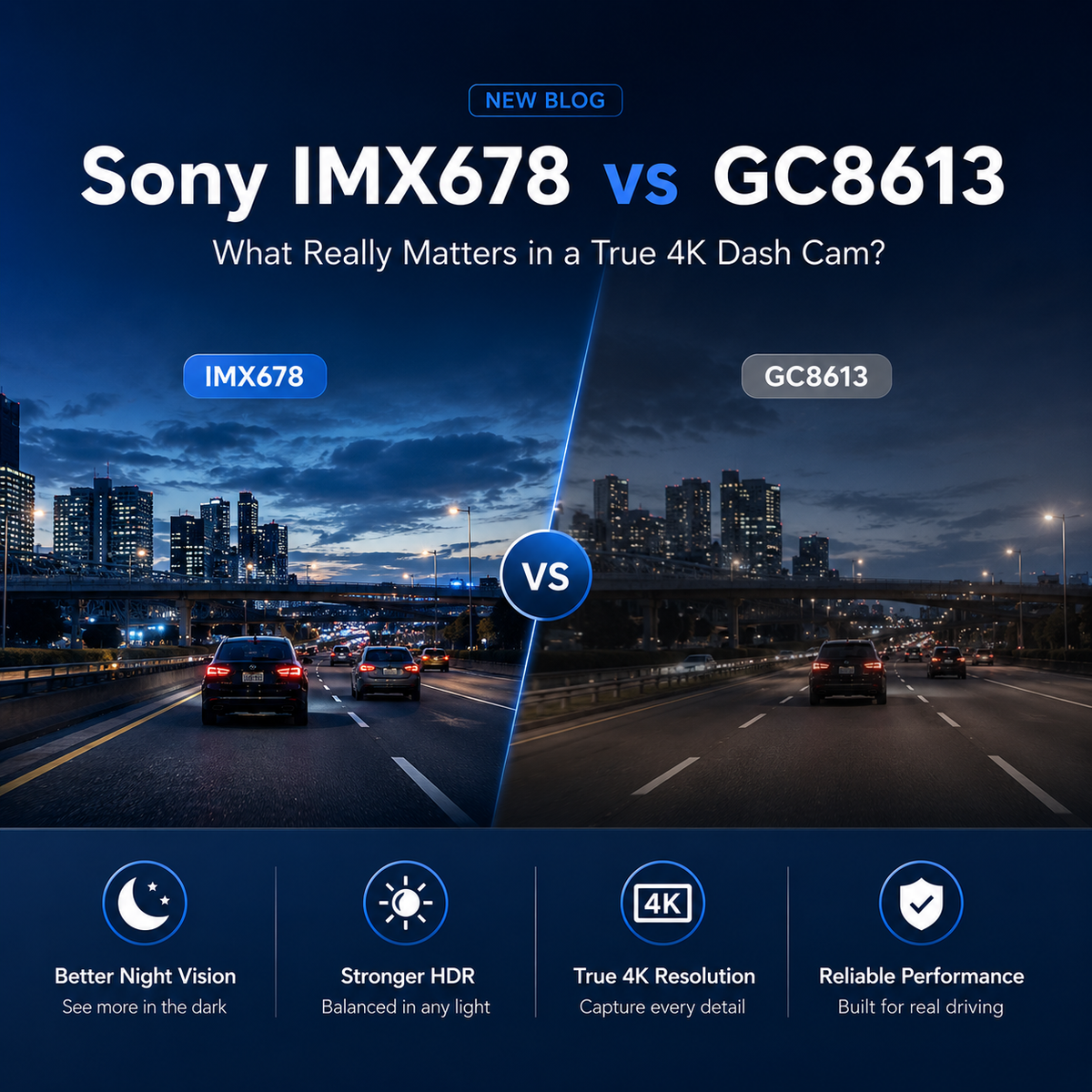
3. Night Vision Is Important for New Drivers
Many new drivers find nighttime driving more challenging.
Low-light conditions can make it harder to judge distance, see road signs, and react to unexpected situations.
A dash cam with strong night vision can help record clearer footage after dark.
When comparing dash cams, look for features such as:
-
Advanced image sensors
-
HDR technology
-
Wide-aperture lenses
-
Good low-light processing
These features can help improve visibility in challenging conditions such as:
-
Night driving
-
Rainy roads
-
Poorly lit streets
-
Parking lots
-
Early morning commutes
For families with teen drivers who drive to school, work, or evening activities, night vision can be an important feature. The Pelsee S3 Ultra Native 4K Dash Cam features dual STARVIS 2 sensors designed for improved low-light and nighttime performance.
4. GPS Tracking Adds Helpful Context
GPS tracking can record useful driving information, such as:
-
Location
-
Route
-
Speed
-
Time and date
This information can provide additional context when reviewing footage.
For example, GPS data may help show where an incident occurred or when a driving event took place.
Parents should use this feature responsibly and transparently. If a dash cam records GPS data, it is a good idea to explain how the feature works and why it is being used.
The goal should be safety, accountability, and learning—not unnecessary surveillance.
5. Easy Footage Access Matters
A dash cam should be easy for both parents and new drivers to use.
Models with Wi-Fi or app connectivity can make it easier to:
-
View recordings on a phone
-
Download important clips
-
Adjust settings
-
Share footage when needed
-
Check emergency recordings
For teen drivers, complicated technology can become frustrating.
A simple setup with easy video access is often better than a system with too many confusing controls.
6. Parking Mode Can Help Protect the Vehicle
Teen drivers and new drivers often park in busy areas, such as:
-
School parking lots
-
College campuses
-
Shopping centers
-
Sports facilities
-
Apartment complexes
-
Street parking areas
Parking Mode allows compatible dash cams to monitor the vehicle while parked.
Depending on the system, recording may be triggered by:
-
Impact
-
Motion
-
Vibration
-
Time-lapse recording
This can be useful if the car is damaged while parked and no one leaves a note.
For families sharing a vehicle with a new driver, Parking Mode can provide extra peace of mind.
7. G-Sensor Protection Helps Save Important Clips
A G-Sensor detects sudden movement, impact, or vibration.
When an event is detected, the dash cam may lock the recording to help prevent it from being overwritten during loop recording.
This is useful for:
-
Collisions
-
Hard braking
-
Parking impacts
-
Sudden bumps
-
Road hazards
For new drivers, G-Sensor protection helps make sure important footage is saved automatically.
8. Choose the Right Memory Card
A reliable memory card is essential for dash cam performance.
Dash cams record continuously and overwrite old footage when the card becomes full.
For teen drivers and new drivers, a high-endurance microSD card is recommended because it is designed for continuous recording.
General recommendations:
| Usage Type | Recommended Memory Card Size |
|---|---|
| Basic front camera | 64GB–128GB |
| Daily driving | 128GB |
| Front and rear recording | 128GB–256GB |
| 4K recording | 256GB |
| Parking Mode use | 256GB or higher if supported |
Always check the dash cam's maximum supported card size before purchasing.
A reliable card can help prevent missing footage or recording errors.
9. Simple Installation Is Better for Beginners
For teen drivers and new drivers, a dash cam should be easy to install and maintain.
A simple installation reduces frustration and helps ensure the camera is used correctly.
When choosing a dash cam, consider:
-
Mounting method
-
Cable management
-
Power source
-
Rear camera installation
-
App setup
-
Memory card access
Some families may prefer professional installation, especially for front-and-rear systems or hardwired parking mode setups.
10. Choose a Dash Cam That Encourages Better Driving
A dash cam should not be used only after something goes wrong.
It can also support better driving habits.
Parents and new drivers can review footage together to discuss:
-
Following distance
-
Lane changes
-
Parking technique
-
Speed awareness
-
Reaction time
-
Night driving confidence
-
Defensive driving habits
This can turn a dash cam into a practical learning tool.
The goal is not to criticize every mistake, but to help new drivers become safer and more confident over time.
What Type of Dash Cam Is Best for Teen Drivers?
There are several types of dash cams to consider.
Front-Only Dash Cam
A front-only dash cam records the road ahead.
It may be suitable for basic driving documentation, but it does not capture incidents behind the vehicle.
Front and Rear Dash Cam
A front and rear dash cam records both directions.
This is often one of the best choices for teen drivers because it provides more complete coverage.
Mirror Dash Cam
A mirror dash cam attaches over or replaces the rearview mirror and usually includes a rear camera.
It may be useful for drivers who want:
-
A larger display
-
Better rear visibility
-
Front and rear recording
-
A more integrated driving experience
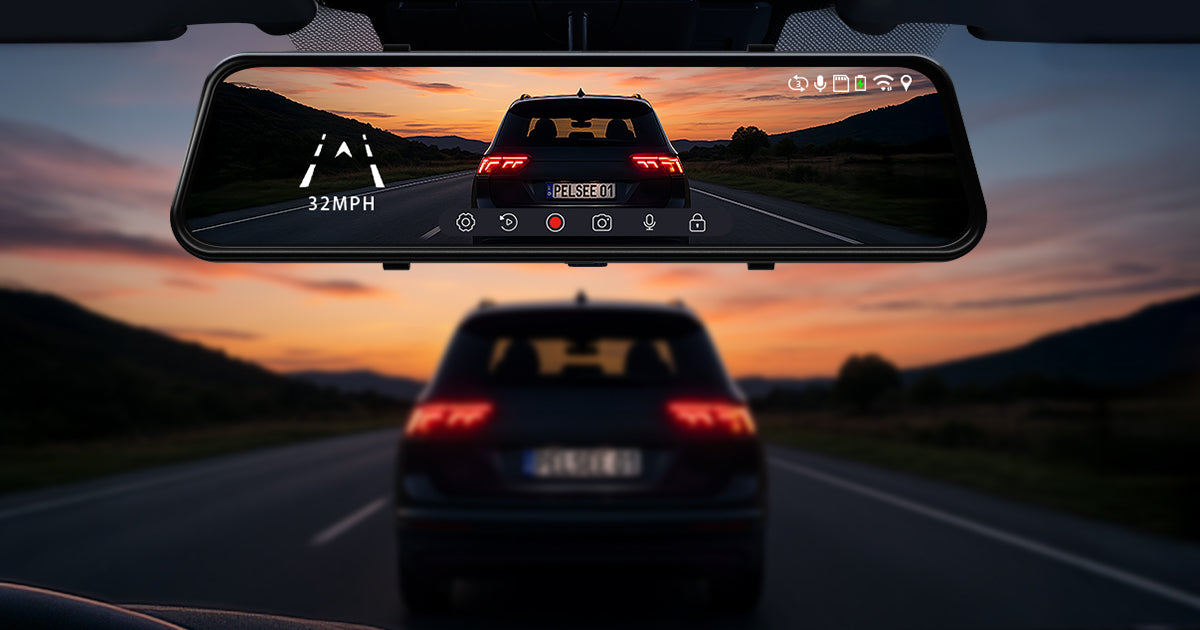
Mirror dash cams can be especially helpful for new drivers who want a clearer rear-view display. The Pelsee P12 Plus Mirror Dash Cam offers an integrated mirror-style setup with front and rear recording, which can be a practical choice for teen drivers.
Best Features to Look for in a Dash Cam for Teen Drivers
When choosing the best dash cam for teen drivers and new drivers, prioritize these features:
-
Front and rear recording
-
Clear video quality
-
2K or 4K resolution
-
Night vision
-
GPS tracking
-
Wi-Fi or app access
-
Parking Mode
-
G-Sensor protection
-
Loop recording
-
High-endurance memory card support
The right combination of features can help provide evidence, support safer driving habits, and make everyday driving less stressful.
What Parents Should Discuss With Teen Drivers
Before installing a dash cam, parents should have an open conversation with the teen driver.
Topics to discuss include:
-
Why the dash cam is being installed
-
What footage may be reviewed
-
How GPS data is used
-
When footage should be saved
-
What to do after an accident
-
How to protect privacy
Being transparent helps build trust.
A dash cam should feel like a safety tool, not a punishment.
Frequently Asked Questions
What is the best dash cam for teen drivers?
The best dash cam for teen drivers should be easy to use and include clear video quality, front and rear recording, night vision, G-Sensor protection, and reliable storage.
Is a dash cam good for new drivers?
Yes. A dash cam can help new drivers document incidents, review driving situations, and build confidence on the road.
Should teen drivers have front and rear dash cams?
Front and rear recording is highly recommended because it captures more complete evidence from both directions.
Is GPS tracking useful for teen drivers?
GPS can provide useful context such as location, speed, time, and route. Parents should use it responsibly and discuss it openly with the driver.
Can a dash cam help after an accident?
Dash cam footage may provide supporting evidence during accident investigations or insurance claims, depending on the quality and relevance of the footage.
Does a dash cam record when the car is parked?
Some dash cams support Parking Mode when paired with a compatible power setup. This can help monitor the vehicle while parked.
Final Thoughts
Choosing the best dash cam for teen drivers and new drivers is about more than recording video.
The right dash cam can provide useful evidence, support safer driving habits, improve confidence, and offer peace of mind for families.
Features such as front and rear recording, night vision, GPS tracking, Parking Mode, and easy footage access can make a big difference in everyday driving situations.
For new drivers, every mile is a learning experience.
A reliable dash cam can help make that experience safer, clearer, and more secure. If you are ready to explore your options, browse the full range of Pelsee dash cams to find the right fit for your teen driver.
Share:
Best Dash Cam for Delivery Drivers and Gig Workers
Best Dash Cam for Road Trips and Long Drives