
Road trips are all about freedom, adventure, and discovering new places. Whether you're driving across states, exploring scenic highways, towing a trailer, or heading out for a weekend getaway, long drives often bring unexpected situations.
Heavy traffic, unfamiliar roads, sudden weather changes, low-light conditions, and parking in unknown areas can all create challenges along the way.
That is why choosing the best dash cam for road trips and long drives is more important than many drivers realize.
A good dash cam does more than record the road. It can help document accidents, capture important details, support insurance claims, monitor your vehicle while parked, and give you added peace of mind during every mile of the journey.
In this guide, we'll explain what features matter most when choosing a dash cam for road trips and long-distance driving.
Why You Need a Dash Cam for Road Trips
Road trips usually involve more driving time than everyday commutes.
More time on the road means more exposure to unexpected events, including:
-
Sudden lane changes
-
Highway debris
-
Rear-end collisions
-
Hit-and-run incidents
-
Aggressive drivers
-
Parking lot damage
-
Unfamiliar traffic rules
-
Wildlife or road hazards
A dash cam can help capture what happens before, during, and after an incident.
Instead of relying only on memory or witness statements, you may have clear video footage that shows what actually happened.
For long-distance drivers, this can be especially valuable.
1. Choose a Dash Cam with High-Resolution Recording
Video quality is one of the most important factors when choosing a road trip dash cam.
During long drives, you may need to capture details such as:
-
License plates
-
Road signs
-
Lane markings
-
Traffic signals
-
Vehicle details
-
Weather conditions
A higher-resolution dash cam can make these details easier to see when reviewing footage later.
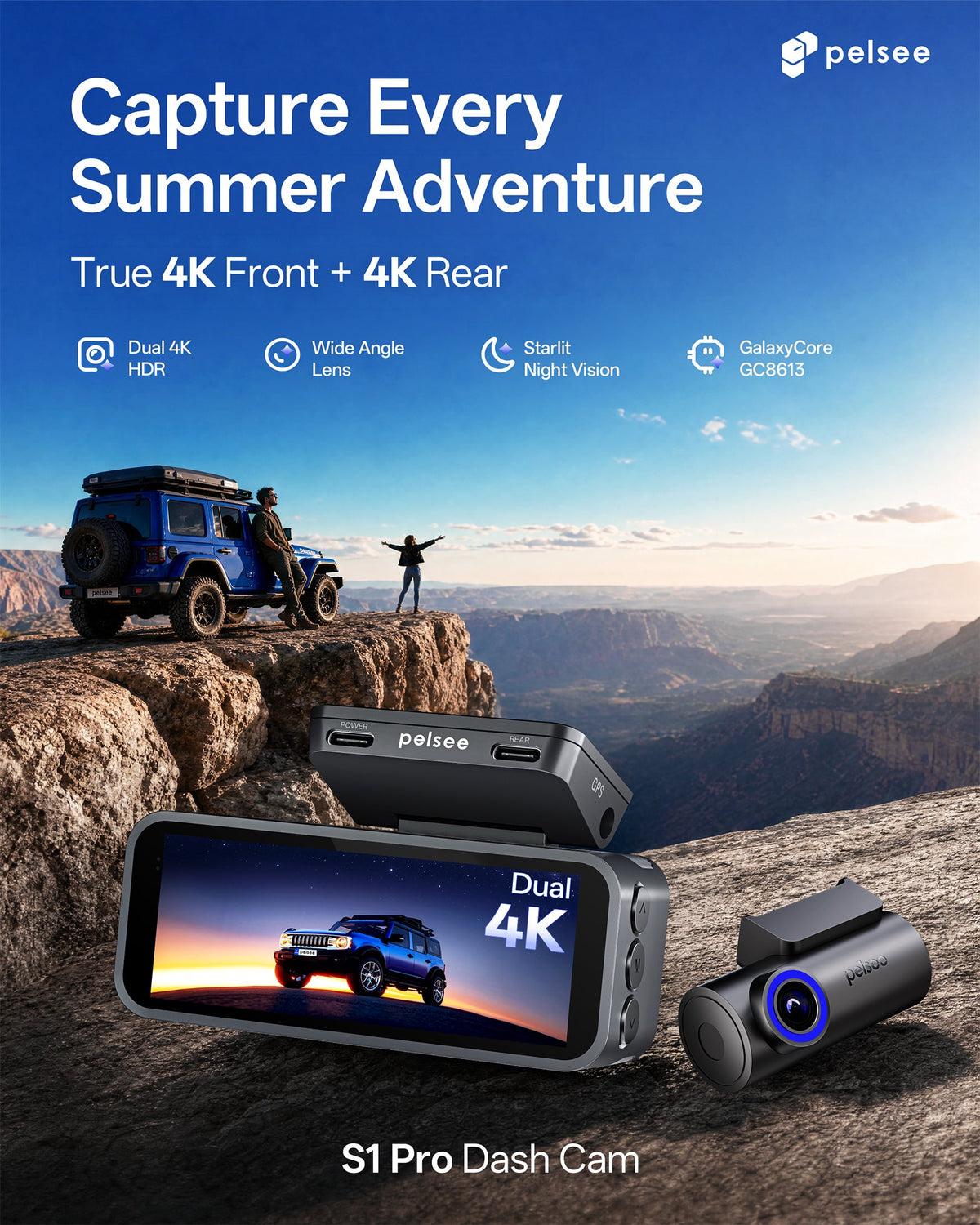
For road trips and long drives, 4K recording is often worth considering because it provides more image detail than standard 1080p footage.
This can be especially helpful on highways, where vehicles may be moving quickly and important details may appear only briefly. If you are looking for a high-resolution option, the Pelsee S3 Touch 4K Dash Cam is one example worth considering.
2. Front and Rear Coverage Provides Better Protection
A front-facing dash cam records what happens ahead of your vehicle.
However, many road incidents happen behind or around you.
A front and rear dash cam can help capture:
-
Rear-end collisions
-
Tailgating
-
Vehicles approaching from behind
-
Parking lot incidents
-
Multi-vehicle accidents
-
Hit-and-run situations
For long drives, front-and-rear coverage offers a more complete view of your surroundings.
This is especially useful for SUVs, pickup trucks, family vehicles, and road trip cars loaded with luggage or equipment. The Pelsee P1 Duo Dash Cam offers reliable front and rear recording for drivers who want broader coverage on long trips.
3. Look for Strong Night Vision Performance
Road trips often start early in the morning or continue late into the night.
Unfortunately, nighttime driving can be one of the most difficult situations for dash cams.
Low-light conditions can cause:
-
Dark footage
-
Headlight glare
-
Motion blur
-
Poor license plate visibility
-
Reduced road detail
When choosing a dash cam for long drives, look for features that improve night recording, such as:
-
Advanced image sensors
-
HDR technology
-
Wide-aperture lenses
-
Strong low-light processing
A dash cam with good night vision can help capture clearer footage when visibility is limited.
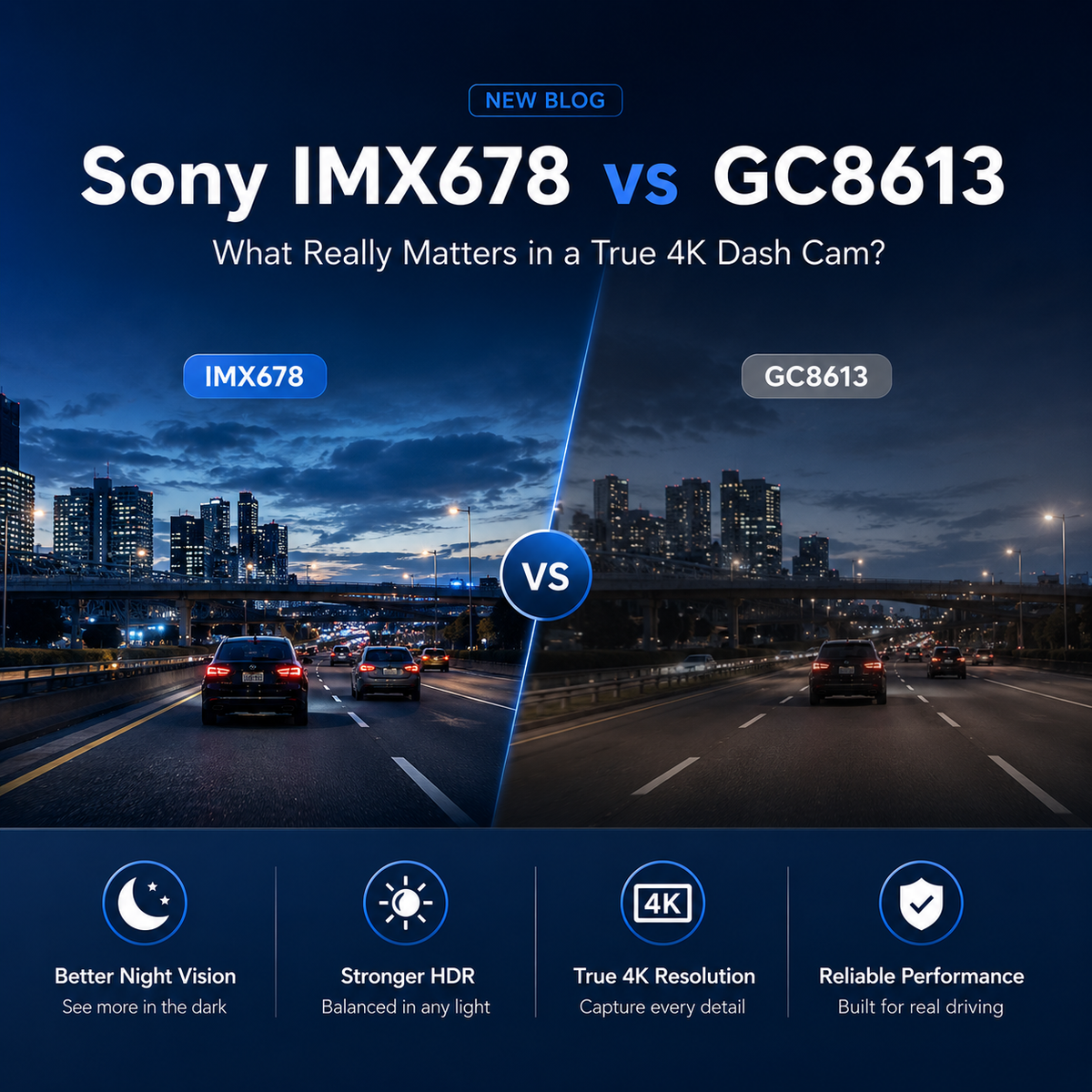
This is especially important for drivers who travel on rural roads, highways, or poorly lit streets. The Pelsee S3 Ultra Native 4K Dash Cam features dual STARVIS 2 sensors designed for improved low-light and nighttime performance.
4. GPS Tracking Is Useful for Long-Distance Driving
GPS is a very helpful feature for road trips.
A dash cam with GPS can record useful driving information, such as:
-
Route history
-
Vehicle speed
-
Location data
-
Time and date information
This information can provide additional context if you need to review footage after an incident.
For example, GPS data may help show where an event occurred, how fast your vehicle was traveling, and when the footage was recorded.
For long-distance road trips, GPS can be a valuable addition to video evidence.
5. Parking Mode Helps Protect Your Vehicle While You're Away
During road trips, your vehicle may be parked in unfamiliar places, including:
-
Hotels
-
Rest stops
-
Campgrounds
-
Tourist attractions
-
Shopping centers
-
Public parking lots
Parking Mode allows compatible dash cams to monitor your vehicle when the engine is off.
Depending on the system, Parking Mode may record when it detects:
-
Motion
-
Impact
-
Vibration
-
Suspicious activity nearby
This can be especially useful if your vehicle is damaged while parked and no one leaves a note.
For road trips, Parking Mode adds another layer of protection when you are away from your car.
6. Storage Capacity Matters for Long Drives
Long drives create a lot of footage.
If your memory card is too small, older recordings may be overwritten sooner than expected.
For road trips, consider using a larger high-endurance memory card.
General recommendations include:
| Driving Need | Recommended Memory Card Size |
|---|---|
| Short daily driving | 64GB–128GB |
| Regular commuting | 128GB |
| Long drives | 256GB |
| 4K front and rear recording | 256GB or higher |
| Extended road trips | 256GB–512GB if supported |
Always check your dash cam's maximum supported memory card size before buying.
A larger card gives you more recording history and reduces the chance of losing footage too quickly.
7. Heat Resistance Is Important for Summer Road Trips
Road trips often happen during warm weather.
Inside a parked vehicle, temperatures can rise quickly, especially in sunny states or during summer travel.
A road trip dash cam should be able to handle:
-
Long recording sessions
-
Hot vehicle interiors
-
Direct sunlight
-
Extended parking periods
-
Daily temperature changes
When choosing a dash cam, look for models designed for reliable operation in challenging driving environments.
Heat resistance and stable performance are important for long-term reliability.
8. Wi-Fi Connectivity Makes Footage Easier to Access
When traveling, you may not always have access to a laptop.
A dash cam with Wi-Fi allows you to connect your smartphone and manage footage more conveniently.
With Wi-Fi, you can often:
-
View recordings on your phone
-
Download important clips
-
Adjust settings
-
Share footage when needed
-
Check saved emergency videos
This can be especially helpful during road trips when you need quick access to footage without removing the memory card.
9. Loop Recording and G-Sensor Protection Are Essential
Loop recording is one of the most important dash cam features.
When the memory card becomes full, the dash cam automatically overwrites the oldest unlocked files.
This allows the camera to continue recording without requiring manual file deletion.
A G-Sensor detects sudden impact or vibration and can lock important footage to help prevent it from being overwritten.
Together, loop recording and G-Sensor protection help ensure your dash cam continues recording while preserving important incident footage.
For road trips, both features are highly recommended.
10. Easy Installation Makes Travel More Convenient
A good road trip dash cam should be easy to install and use.
Before choosing a model, consider:
-
Mounting style
-
Cable management
-
Power options
-
Rear camera installation
-
App setup
-
Memory card access
For long-distance travel, reliability and simplicity matter.
You do not want to spend your trip troubleshooting complicated settings or unstable recording issues.
A clean installation and easy operation can make the driving experience much smoother.
What Type of Dash Cam Is Best for Road Trips?
There are several types of dash cams to consider.
Front-Only Dash Cam
A front-only dash cam records the road ahead.
It may be suitable for basic driving documentation, but it does not capture what happens behind your vehicle.
Front and Rear Dash Cam
A front and rear dash cam records both directions.
This is one of the best options for road trips because it provides broader coverage.
Mirror Dash Cam
A mirror dash cam attaches over or replaces the rearview mirror and usually includes a rear camera.
It can be useful for drivers who want:
-
A larger display
-
Better rear visibility
-
Front and rear recording
-
A more integrated driving experience
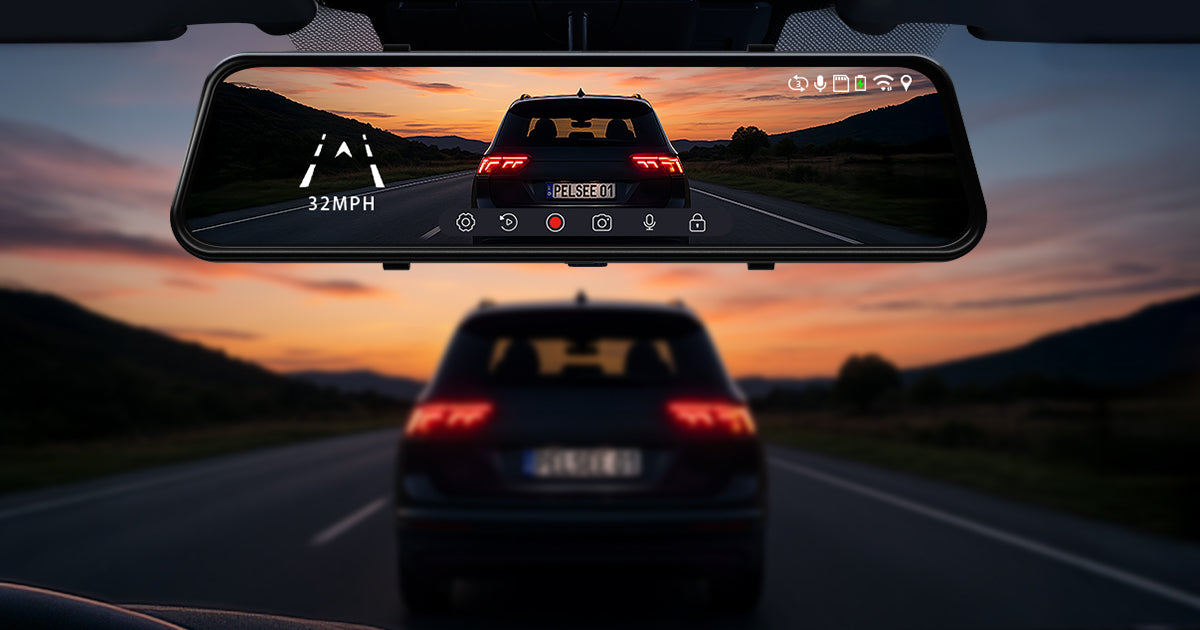
For SUVs, pickup trucks, and family road trip vehicles, mirror dash cams can be especially practical. The Pelsee P12 Plus Mirror Dash Cam is a popular choice for drivers who prefer a mirror-style setup with integrated front and rear recording.
Best Features to Look for in a Road Trip Dash Cam
When choosing the best dash cam for road trips and long drives, prioritize these features:
-
4K video recording
-
Front and rear coverage
-
Strong night vision
-
GPS tracking
-
Parking Mode
-
Loop recording
-
G-Sensor protection
-
Large memory card support
-
Wi-Fi connectivity
-
Reliable heat performance
A dash cam does not need every possible feature, but the right combination can make a big difference during long-distance travel.
Who Should Use a Dash Cam for Long Drives?
A road trip dash cam can be useful for many types of drivers, including:
-
Families
-
Daily commuters
-
Long-distance drivers
-
Road trip travelers
-
RV owners
-
Pickup truck drivers
-
SUV owners
-
Rideshare drivers
-
Outdoor adventure travelers
Anyone who spends extended time on the road can benefit from reliable video recording.
Frequently Asked Questions
What is the best dash cam for road trips?
The best dash cam for road trips should offer high-resolution recording, front and rear coverage, strong night vision, GPS tracking, parking mode, and large storage support.
Is a 4K dash cam worth it for long drives?
Yes, a 4K dash cam can be worth it for long drives because it captures more detail, which may help with license plates, road signs, and accident evidence.
Do I need a rear camera for road trips?
A rear camera is highly recommended because it records what happens behind your vehicle, including rear-end collisions, tailgating, and parking lot incidents.
How much storage do I need for a road trip dash cam?
For long drives, a 256GB memory card is often a good choice. For 4K front-and-rear recording or extended trips, 256GB or larger may be better if supported by the device.
Is Parking Mode useful during road trips?
Yes. Parking Mode can help monitor your vehicle when parked at hotels, rest stops, campgrounds, and public parking lots.
Can a dash cam help with insurance claims after a road trip accident?
Dash cam footage may provide supporting evidence during insurance claim investigations, depending on the quality and relevance of the footage.
Final Thoughts
Choosing the best dash cam for road trips and long drives is about more than video resolution.
A reliable road trip dash cam should provide clear footage, broad coverage, strong night performance, useful GPS data, parking protection, and enough storage for extended driving.
Whether you're taking a weekend trip, crossing state lines, or exploring scenic highways, the right dash cam can help document your journey and provide peace of mind along the way.
When the road is long and unpredictable, reliable video evidence can make every drive feel more secure.
Share:
Best Dash Cam for Teen Drivers and New Drivers
Rear Camera Dash Cam vs Backup Camera