
In an era where technology is redefining the way we interact with the world, the automotive industry is not far behind. Advanced Driver Assistance Systems (ADAS) and Blind Spot Detection (BSD) have emerged as cornerstones of vehicle safety, and their integration into dash cams is transforming the driving experience. Let’s explore how these technologies are reshaping road safety and why they are becoming indispensable features in modern dash cams.
Understanding ADAS:
Advanced Driver Assistance Systems (ADAS) is a suite of technologies designed to assist drivers and enhance vehicle safety. These systems leverage sensors, cameras, and radar to monitor the vehicle’s surroundings and provide real-time feedback to the driver. Here are some key ADAS features:
Lane Departure Warning (LDW): Alerts the driver when unintentional lane departure occurs, preventing potential collisions.
Forward Collision Warning (FCW): Warns drivers of an impending collision with a vehicle or obstacle in their path, allowing for timely reactions.
Automatic Emergency Braking (AEB): Automatically applies the brakes if a collision is imminent and the driver doesn’t react in time.
Adaptive Cruise Control (ACC): Maintains a set speed but adjusts it to keep a safe following distance from the vehicle ahead.
Unveiling Blind Spot Detection (BSD):
Blind Spot Detection (BSD) is another crucial safety feature that addresses a common challenge for drivers—limited visibility in certain areas around the vehicle. Here’s how BSD enhances safety:
Visual and Audible Alerts: BSD systems use sensors to detect vehicles in the driver’s blind spots. When a vehicle is detected, the system provides visual and audible alerts to warn the driver.
Enhanced Lane Changes: Drivers receive timely notifications, making lane changes safer and reducing the risk of collisions caused by overlooked blind spots.
The Fusion: ADAS and BSD in Dash Cams:
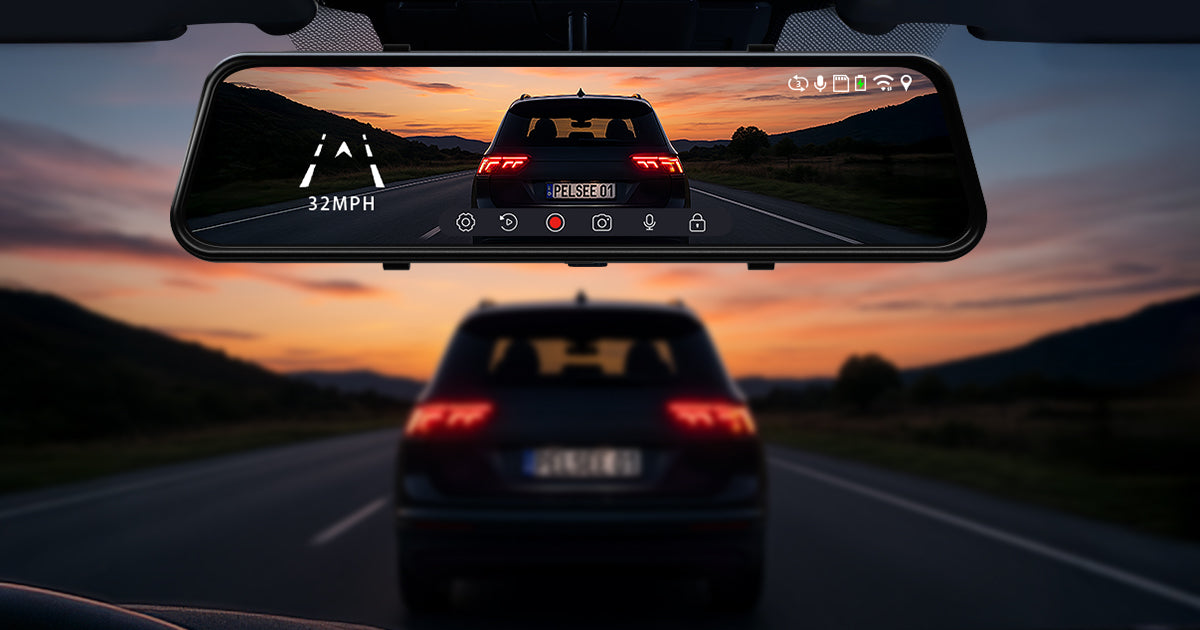
Enter the Pelsee Mirror Dash Cam, a game-changer in the world of smart driving. This sleek device not only serves as a reliable dash cam but also integrates advanced ADAS and BSD features, elevating your driving experience to a whole new level. Available in two distinct sizes, 10 inches and 12 inches, this advanced dash cam caters to diverse preferences, ensuring a perfect fit for any vehicle. The Pelsee Rear View Mirror Dash Camera captures every detail with stunning clarity. You can choose between the 2K and 4K resolution options, elevating your driving experience to new visual heights.
As we embrace the future of driving, the integration of ADAS and BSD into dash cams marks a significant stride toward safer roads. These technologies are not just innovations; they are a testament to our commitment to fostering a secure and enjoyable driving experience. Whether you’re a tech enthusiast or someone simply looking to enhance your driving experience, the Pelsee Mirror Camera is a must-have for the modern driver. Upgrade your journey now!
Share:
Unveiling the Power of 24-Hour Parking Mode: A Dash Cam’s Guardian Angel
Unveiling the Pelsee P2 Trio Dash Cam: Elevate Your Driving Experience