
Dash cameras have become an essential driving accessory for modern vehicles. They help record accidents, provide evidence for insurance claims, and offer additional security when your car is parked.
However, when shopping for a dash camera, many drivers face a common question: should they choose a mirror dash cam or a traditional dash cam?
Both types are designed to record your driving and improve road safety, but they differ in design, installation, visibility, and overall user experience. In this guide, we’ll compare these two popular camera styles and explain their advantages, disadvantages, and ideal use cases.
What Is a Mirror Dash Cam?
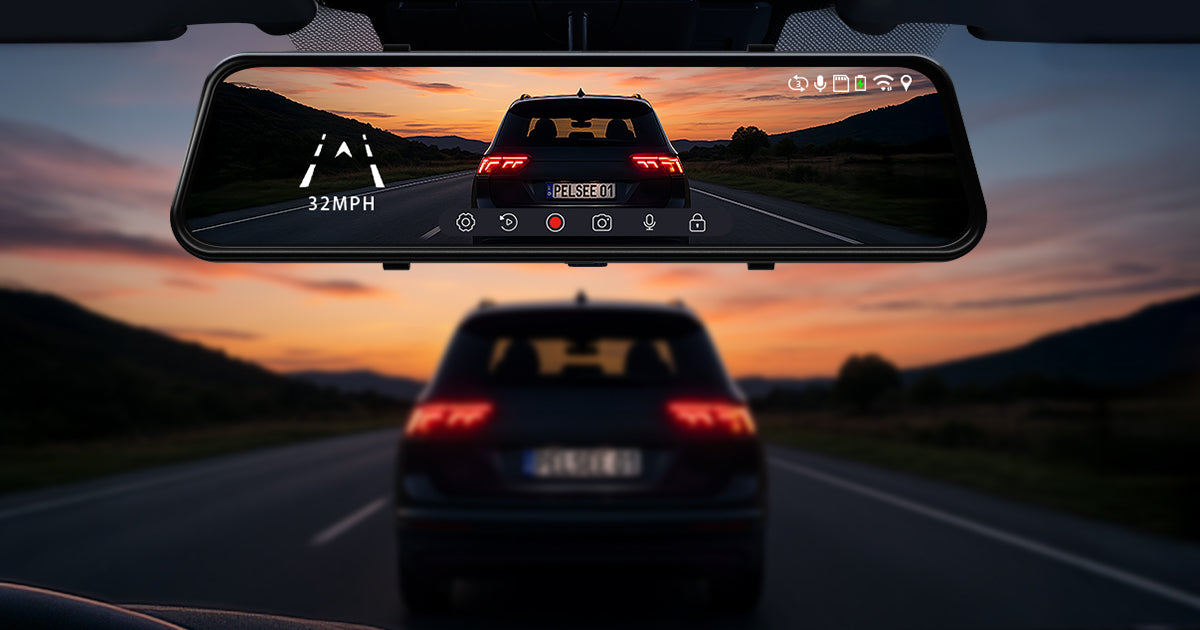
A mirror dash camera is a dash cam designed to attach directly to your vehicle’s rearview mirror. Instead of using a small standalone screen, the mirror itself acts as a display for the camera system.
Most models include both front and rear cameras, allowing the driver to record what happens in front of and behind the vehicle. The rear camera feed can also appear on the mirror screen, essentially turning the device into a digital rearview mirror.
Common features of modern mirror dash cameras include the following:
-
large touchscreen mirror displays
-
dual-channel recording
-
parking monitoring
-
loop recording
-
GPS tracking
-
smartphone app connectivity
Because the device integrates with the existing rearview mirror, many drivers appreciate the cleaner look it provides compared with traditional dash cameras.
For drivers interested in mirror-style systems, models like the Pelsee P12 Pro Max provide a large touchscreen mirror display along with high-resolution front recording and a rear camera for full driving coverage.
What Is a Traditional Dash Cam?
A traditional dash camera is a compact device mounted directly on the windshield using adhesive or suction mounts. These cameras typically feature a small built-in display and focus mainly on recording the road ahead.
Some models support additional rear cameras, creating a dual dash cam system, but the main recording unit remains a separate device mounted on the windshield.
Typical features include the following:
-
front-facing video recording
-
automatic loop recording
-
impact detection with a G-sensor
-
optional rear camera support
Traditional dash cameras remain popular because they are simple, compact, and easy to install.
For drivers who prefer a more traditional dash camera design, compact touchscreen models such as the Pelsee S3 Touch offer a simple windshield-mounted solution with essential recording features while maintaining a minimal footprint on the dashboard.
Key Differences Between Mirror Dash Cameras and Traditional Dash Cams
Although both types record driving footage, their design and functionality create different user experiences.
| Feature | Mirror Dash Camera | Traditional Dash Camera |
|---|---|---|
| Display | Large mirror touchscreen | Small built-in screen |
| Installation | Mounted over rearview mirror | Mounted on windshield |
| Rear camera | Usually included | Often optional |
| Interior appearance | Integrated with mirror | Visible device |
| Rear visibility | Can display rear camera feed | Does not affect mirror |
The biggest difference between the two options lies in display size and integration with the vehicle interior.
Advantages of Mirror Dash Cameras
Mirror dash cameras have become increasingly popular due to several practical benefits.
Larger Display
Unlike traditional cameras that use small screens, mirror dash cameras often feature displays between 10 and 12 inches. This larger screen makes it easier to review recordings, adjust settings, and switch between camera views.
Improved Rear Visibility
Many mirror cameras connect to a rear camera that streams video directly onto the mirror display. This creates a digital rearview mirror, which can improve visibility in situations where the back window is partially blocked.
Examples include:
-
passengers sitting in the back seat
-
cargo or luggage in the trunk
-
poor lighting conditions at night
Cleaner Interior Design
Because the camera attaches to the rearview mirror, it blends naturally with the vehicle interior. This reduces windshield clutter and gives the dashboard area a more organized appearance.
Advanced Features
Modern mirror camera systems often include advanced functions such as:
-
high-resolution video recording
-
parking surveillance
-
voice control
-
GPS location tracking
-
smartphone app connectivity
These features make mirror dash cameras a strong option for drivers who want a more advanced recording system.
Advantages of Traditional Dash Cameras
Despite the rise of mirror cameras, traditional dash cams remain a practical choice for many drivers.
Compact Size
Standard dash cameras are typically small and lightweight. Many drivers install them behind the rearview mirror so they remain relatively discreet.
Easy Installation
Most traditional cameras are designed for simple installation. Drivers only need to mount the camera on the windshield and connect it to a power source.
Affordable Options
Basic dash cameras are usually less expensive than mirror camera systems. This makes them appealing to drivers who only need simple video recording without additional features.
Installation Comparison
Installation is another factor drivers consider when choosing between these two camera styles.
Mirror Camera Installation
Mirror dash cameras attach directly to the existing rearview mirror using adjustable straps or clips. The rear camera is mounted at the back of the vehicle and connected to the main display.
Once installed, the mirror screen can switch between front and rear camera views.
Traditional Camera Installation
Traditional dash cameras mount directly on the windshield. If a rear camera is included, a cable must be routed to the back of the vehicle.
Although the setup process is slightly different, both systems are designed for relatively straightforward installation.
Which Option Is Better for Different Drivers?
The best choice depends on your driving habits and personal preferences.
| Driver Type | Recommended Option |
|---|---|
| Everyday drivers | Mirror dash camera |
| Budget buyers | Traditional dash cam |
| Rideshare drivers | Dual-channel camera system |
| Tech enthusiasts | Advanced mirror camera |
Drivers who want larger displays and better rear visibility often prefer mirror cameras, while those who want a simple and affordable device may choose traditional dash cameras.
Final Verdict
Both mirror dash cameras and traditional dash cams provide valuable protection while driving. Each option offers reliable video recording and can help document accidents or unexpected events on the road.
Drivers who prefer simple and compact devices may find traditional dash cameras perfectly sufficient.
However, those who want larger displays, better rear visibility, and more integrated technology often find mirror dash cameras to be the more versatile choice.
As dash camera technology continues to evolve, mirror-style systems are becoming increasingly common in modern vehicles.
Frequently Asked Questions
Are mirror dash cameras better than standard dash cams?
Mirror cameras offer larger displays and better rear visibility, while traditional dash cams focus on compact size and simplicity. The best option depends on the driver’s preferences.
Do mirror dash cameras record both directions?
Most mirror dash cameras include both front and rear cameras, allowing them to record traffic in front of and behind the vehicle.
Can dash cameras record while the car is parked?
Many dash cameras support parking monitoring. When connected to a hardwire kit, the camera can record motion or impacts while the vehicle is parked.
Are dash cameras difficult to install?
Most modern dash cameras are designed for easy installation and can be installed without professional tools.
Share:
Best Mirror Dash Cam 2026: Complete Buying Guide
How to Hardwire a Dash Cam Without Draining Your Battery