
After a car accident, one of the biggest challenges is proving what actually happened. Drivers may have different versions of events, witnesses may disagree, and physical damage alone does not always tell the full story.
This is where dash cam footage can make a difference.
A dash cam provides a continuous video record of your journey and may capture critical details before, during, and after an incident. In many situations, dash cam footage can serve as valuable supporting evidence during insurance claims and accident investigations.
But how useful is dash cam footage for insurance claims, and can it actually help prove fault?
Let's take a closer look.
Why Dash Cam Footage Matters in Insurance Claims
Insurance companies rely on evidence to evaluate claims and determine liability. The more reliable information available, the easier it may be to understand what happened during an accident.
Common sources of evidence include:
- Driver statements
- Witness accounts
- Police reports
- Vehicle inspections
- Accident scene photographs
While these sources are important, they may not always provide a complete picture.
Dash cam footage offers something unique: a real-time video recording of the incident. When available, this footage may help insurers review the circumstances of an accident more accurately.
For this reason, many drivers choose to install a dash cam as an extra layer of protection.
Do Insurance Companies Accept Dash Cam Footage?
In many cases, insurance companies may accept dash cam footage as supporting evidence during the claims process.
However, dash cam footage is usually reviewed alongside other evidence rather than being treated as the sole determining factor.
Insurance adjusters may consider:
- Video footage
- Police reports
- Witness statements
- Vehicle damage
- Traffic laws
- Other available evidence
The usefulness of dash cam footage often depends on the quality of the recording and whether the incident is clearly visible.
A clear video showing the sequence of events may help support a driver's version of what happened.
Can Dash Cam Footage Help Prove Fault?
One of the most common questions drivers ask is whether dash cam footage can help prove fault after an accident.
The answer is that it may help.
For example, dash cam footage may capture:
- A driver running a red light
- Failure to yield
- Unsafe lane changes
- Tailgating behavior
- Distracted driving
- Rear-end collisions
When these events are clearly recorded, the footage may provide useful context during an insurance claim investigation.
Although dash cam footage does not automatically determine fault, it can be an important piece of supporting evidence.
5 Ways Dash Cam Footage Can Support Insurance Claims
1. Provides Objective Evidence
Memories fade and perspectives differ.
Dash cam footage captures events as they occur, providing an objective record that may help reduce disputes between parties involved in an accident.
2. Helps Document Hit-and-Run Incidents
Hit-and-run accidents can be difficult to investigate.
A high-quality dash cam may capture:
- License plate numbers
- Vehicle make and model
- Time and location information
- Direction of travel
This information may assist both law enforcement and insurance companies.
3. Protects Against False Claims
Unfortunately, insurance fraud still occurs.
Some drivers may exaggerate damages or provide inaccurate descriptions of an accident.
Dash cam evidence may help clarify what actually happened and support legitimate claims.
4. Supports Parking Damage Claims
Many vehicle owners discover damage long after an incident occurs.
With Parking Mode enabled, compatible dash cams may record:
- Parking lot accidents
- Vehicle vandalism
- Hit-and-run parking damage
- Break-in attempts
This footage may provide valuable evidence when filing insurance claims. To enable Parking Mode, you'll need a hardwire kit that provides continuous power to your dash cam even when the vehicle is off.
5. Complements Police Reports
Police reports remain an important part of many accident investigations.
Dash cam footage may provide additional visual context that supports information documented in an official report.
What Information Should Your Dash Cam Capture?
Not all dash cams provide the same level of evidence.
Several features can improve the usefulness of dash cam footage during insurance claims.
High-Resolution Video Recording
Clear footage makes it easier to identify:
- License plates
- Road signs
- Traffic signals
- Vehicle details
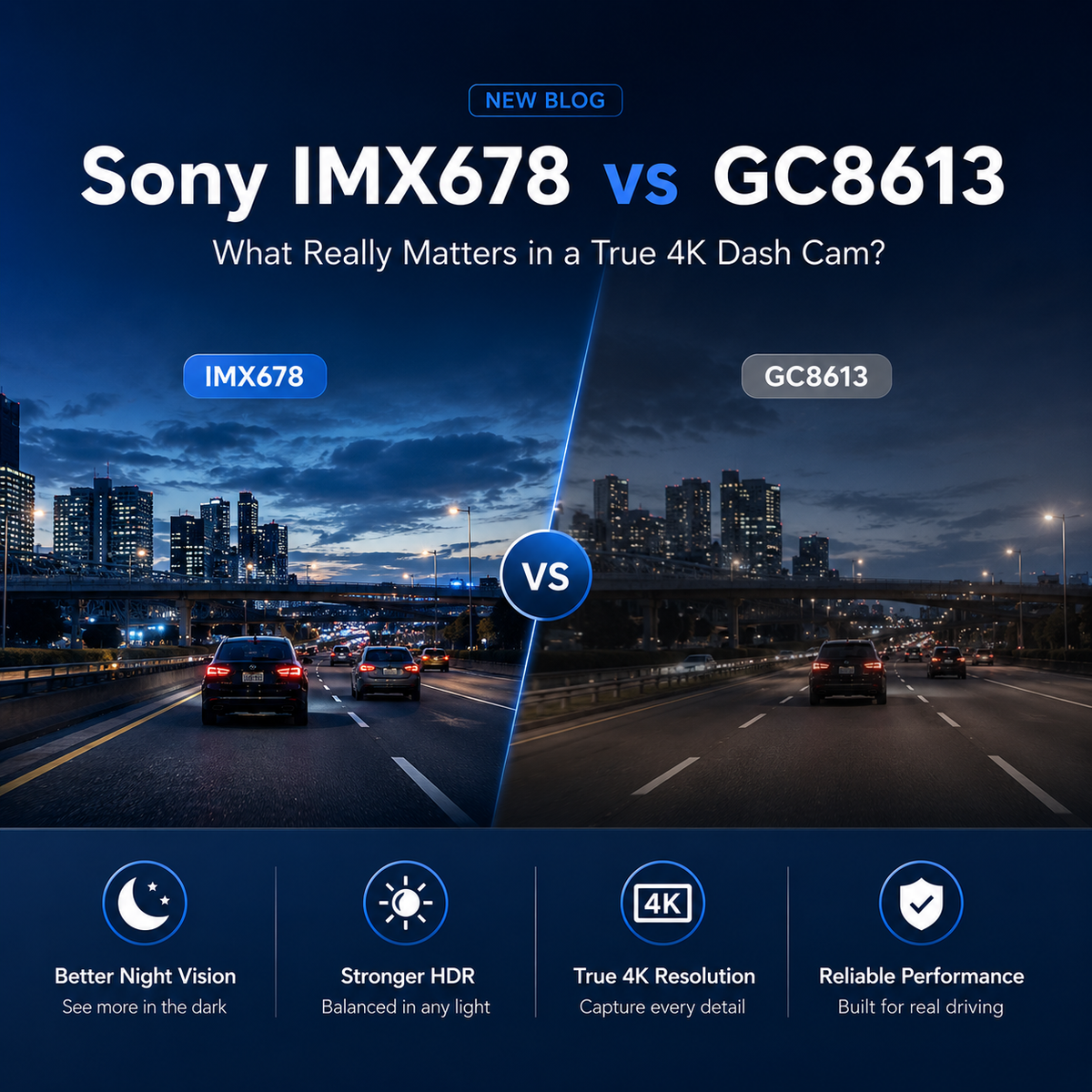
Modern 4K dash cams typically capture more detail than lower-resolution models.
Higher-resolution footage may make it easier to review incidents and identify important details when submitting an insurance claim.
Night Vision Performance
Many accidents occur after sunset or in low-light conditions.
Advanced image sensors and HDR technology help improve visibility when lighting conditions are challenging.
Modern dash cams equipped with Sony STARVIS 2 sensors can capture clearer footage in dark environments, helping drivers record important details that may otherwise be difficult to see.
GPS Tracking
Some dash cams include built-in GPS functionality that can record:
- Location data
- Speed information
- Driving routes
- Time stamps
This information may provide additional context during accident investigations.
GPS records can help establish where and when an incident occurred, which may be useful during insurance claim reviews.
Front and Rear Coverage
Dual-channel systems record both the front and rear of the vehicle.
This additional coverage may be useful in:
- Rear-end collisions
- Multi-vehicle accidents
- Parking lot incidents
Capturing multiple viewpoints may help provide a more complete picture of an accident.
Should You Submit Dash Cam Footage to Insurance?
If your dash cam recorded an accident, it may be beneficial to preserve the footage and discuss it with your insurance provider.
After an accident:
- Ensure everyone is safe.
- Contact emergency services if necessary.
- Save and back up the footage immediately.
- Avoid editing the recording.
- Document the scene with photos.
- Follow your insurer's instructions regarding evidence submission.
Keeping the original recording intact helps preserve its value as supporting evidence.
Frequently Asked Questions About Dash Cam Insurance Claims
Does insurance accept dash cam footage?
Many insurance companies may accept dash cam footage as supporting evidence during claim investigations. Acceptance and usefulness can vary depending on the circumstances and available evidence.
Can dash cam footage prove fault?
Dash cam footage may help establish what happened during an accident, but it is typically considered alongside other evidence when determining fault.
How long should I keep accident footage?
It is generally a good idea to save and back up any footage related to an accident until the claim has been fully resolved.
Is dash cam footage useful for hit-and-run accidents?
Yes. Dash cam footage may capture important identifying details such as license plates, vehicle descriptions, and timestamps.
What if my dash cam didn't capture the entire accident?
Partial footage may still provide useful information. Insurance companies often evaluate multiple sources of evidence when reviewing a claim.
Looking for a Dash Cam That Helps Protect You on the Road?
Reliable video evidence can make a significant difference when questions arise after an accident.
When choosing a dash cam, consider features such as:
- 4K video recording
- GPS tracking
- Parking Mode
- G-Sensor protection
- Front and rear recording
- Advanced night vision technology
These features can help drivers capture clearer footage and create more useful records of driving events. The Pelsee P2 Trio Dash Cam combines all of these features — 4K front recording, GPS, Parking Mode, and multi-channel coverage — making it a strong choice for drivers who want comprehensive protection on the road.
Final Thoughts
Dash cam insurance claims often depend on the quality of available evidence. While dash cam footage does not guarantee claim approval or determine fault on its own, it may provide valuable supporting evidence that helps clarify what happened during an accident.
Whether you're commuting daily, driving professionally, or simply looking for additional peace of mind, a reliable dash cam can help you document important moments on the road and provide useful evidence when it matters most.
Disclaimer
Dash cam footage may support an insurance claim, but it does not guarantee claim approval or determine fault on its own. Insurance regulations, evidence requirements, and claim procedures may vary by insurer, state, and individual circumstances.
Share:
Common Mistakes When Installing a Pelsee Dash Cam and How to Fix Them
Do You Need a Dash Cam If Your Car Already Has Cameras?