
Driving an RV, camper, van, or other long vehicle is very different from driving a standard car.
These vehicles are larger, heavier, longer, and often harder to maneuver. They also have bigger blind spots, wider turning needs, and more challenging rear visibility. Whether you are traveling across the country, camping on weekends, towing a trailer, or driving a converted van, having reliable video coverage can make a major difference.
That is why choosing the best dash cam for RVs, campers, and long vehicles requires more thought than simply buying a basic front-facing camera.
A good RV dash cam should help capture the road ahead, monitor what happens behind the vehicle, provide useful footage during long drives, and offer extra protection when parked at campgrounds, rest stops, or unfamiliar locations.
In this guide, we will explain what features matter most when choosing a dash cam for RVs, campers, motorhomes, vans, trailers, and other long vehicles.
Why RVs and Campers Need a Dash Cam
RVs and campers are often used for long-distance travel, road trips, and outdoor adventures.
That means more time on highways, rural roads, mountain routes, campgrounds, and unfamiliar streets.
Common risks include:
-
Rear-end collisions
-
Blind spot incidents
-
Lane-change disputes
-
Trailer-related accidents
-
Parking lot damage
-
Hit-and-run incidents
-
Low-speed backing accidents
-
Campground parking issues
-
Road debris
-
Wildlife or road hazards
A dash cam can help record what happens before, during, and after an incident.
For RV owners and camper drivers, dash cam footage may provide valuable evidence when reviewing accidents, insurance claims, parking damage, or unexpected road events.
What Makes an RV Dash Cam Different?
A regular dash cam may work well for a sedan or small SUV, but RVs and long vehicles often need more coverage.
The best dash cam for RVs should consider:
-
Longer vehicle length
-
Larger blind spots
-
Rear visibility limitations
-
Longer cable routing
-
More complex installation
-
Long-distance driving
-
Overnight parking
-
Greater storage needs
Because of these challenges, many RV drivers benefit from a front and rear dash cam system rather than a front-only camera.
For long vehicles, the rear camera setup is especially important.
1. Choose a Front and Rear Dash Cam
Front and rear recording is one of the most important features for RVs, campers, and long vehicles.
A front camera records the road ahead.
A rear camera records what happens behind the vehicle.
This dual coverage can help capture:
-
Rear-end collisions
-
Vehicles following too closely
-
Trailer movement
-
Lane-change situations
-
Parking lot incidents
-
Hit-and-run damage
-
Traffic behind the vehicle
For RVs and campers, rear coverage is often just as important as front coverage because the driver may not have a clear view behind the vehicle.
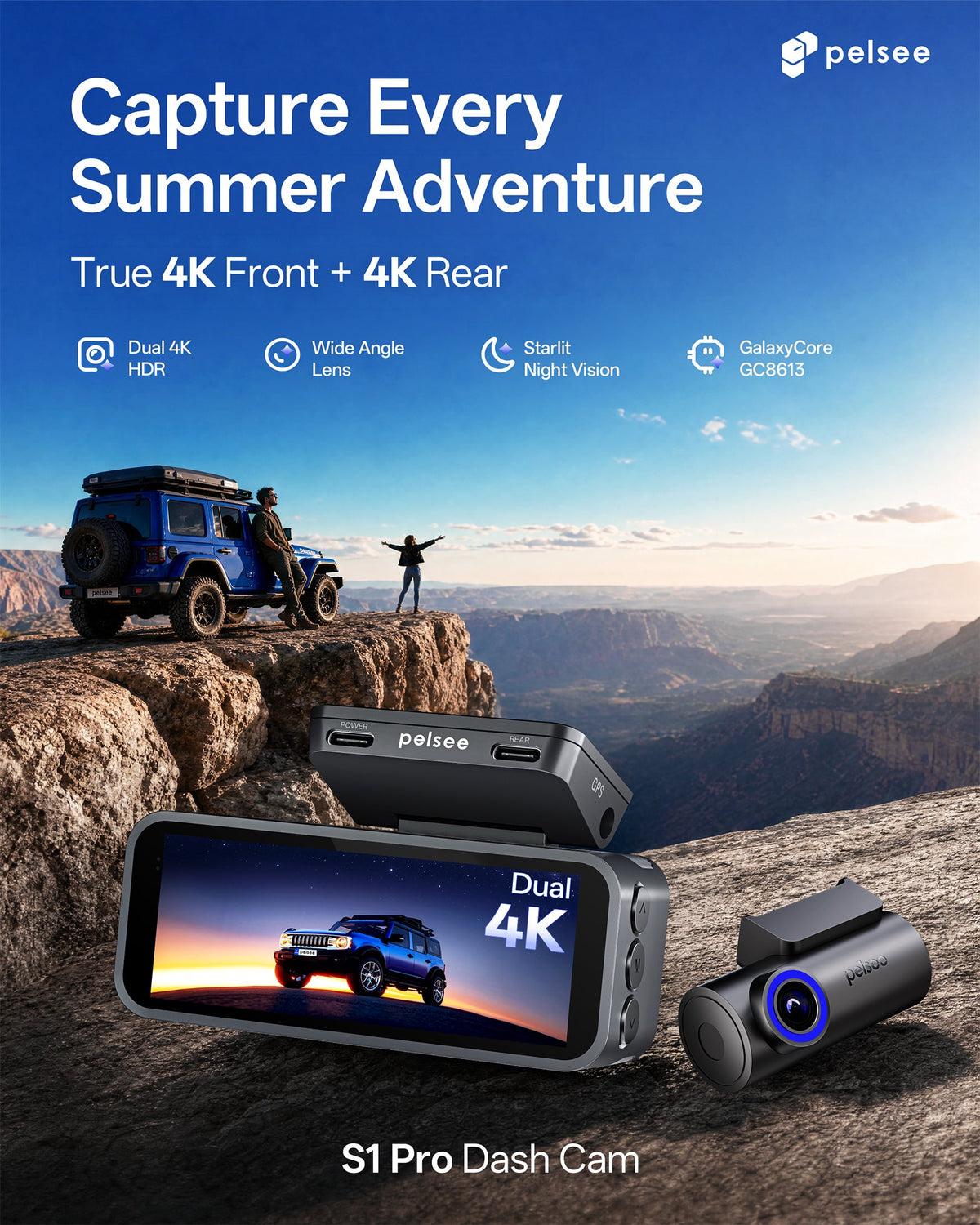
A front and rear dash cam can provide more complete video evidence than a front-only system. The Pelsee P1 Duo Dash Cam is a front-and-rear option worth considering for drivers who need reliable dual-channel coverage on long trips.
2. Check Rear Camera Cable Length
Rear camera cable length is one of the most important details for RVs and long vehicles.
Many standard front and rear dash cams are designed for sedans or small SUVs. Their rear camera cables may not be long enough for:
-
RVs
-
Campers
-
Motorhomes
-
Vans
-
Pickup trucks with trailers
-
Long SUVs
-
Commercial vehicles
Before buying, measure the approximate distance from the front camera location to the rear camera mounting area.
Remember that cables usually need to route around trim, panels, floors, ceilings, or door frames, so the required length may be longer than the vehicle's straight-line length.
For RVs and campers, choosing a system that supports a longer rear camera extension cable can make installation much easier.
3. Look for High-Resolution Video Recording
Video quality matters because dash cam footage is only useful if important details are visible.
For RVs and long vehicles, footage may need to capture:
-
License plates
-
Road signs
-
Lane markings
-
Vehicle movement
-
Trailer position
-
Traffic signals
-
Road hazards
-
Parking lot activity
A basic 1080p dash cam can record general footage, but higher-resolution options such as 2K or 4K can provide more detail.
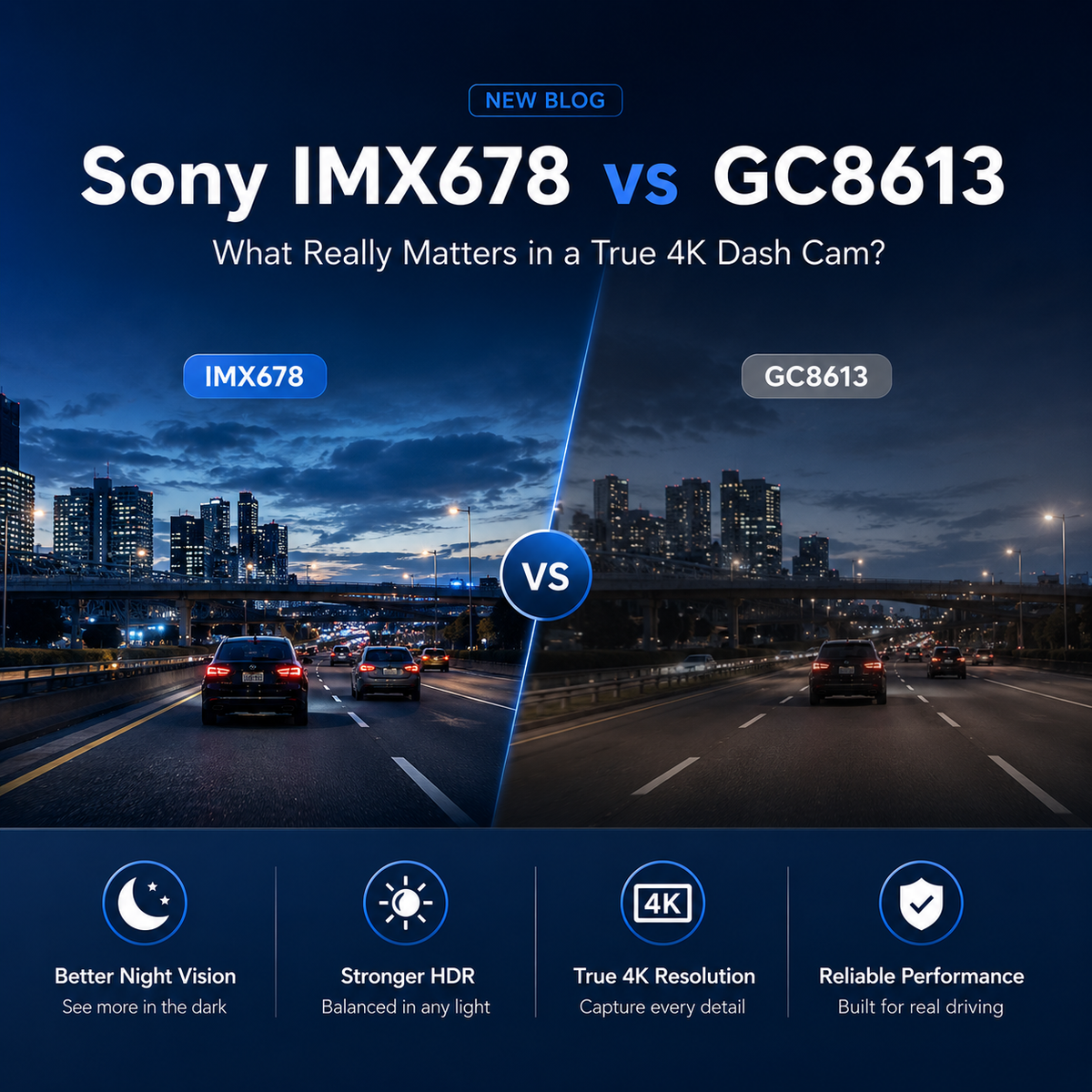
For long-distance travel, a 4K dash cam may be especially useful because it can capture sharper footage when vehicles are moving quickly or important details appear briefly. The Pelsee S3 Touch 4K Dash Cam offers high-resolution recording that can make license plates and road details easier to identify during long drives.
4. Rear Camera Quality Matters
Many drivers focus only on the front camera, but rear camera quality is especially important for RVs and long vehicles.
Common rear camera resolutions include:
-
1080p
-
1440p
-
2.5K
A higher-resolution rear camera may help capture clearer details behind the vehicle.
This can be useful for:
-
Rear-end collisions
-
Tailgating
-
Parking damage
-
Vehicles approaching from behind
-
Trailer monitoring
-
Campground driving
For larger vehicles, rear footage can be extremely valuable because many incidents happen behind the driver.
5. Wide Viewing Angle Helps With Blind Spots
RVs, campers, and long vehicles have larger blind spots than standard cars.
A dash cam with a wide viewing angle can help capture more of the surrounding road.
A wider field of view may help record:
-
Adjacent lanes
-
Vehicles beside the RV
-
Turns and curves
-
Parking lot movement
-
Campground activity
However, wider is not always better.
Extremely wide-angle lenses may create distortion, which can make details harder to judge. The best dash cam for long vehicles should balance wide coverage with clear image quality.
6. Night Vision Is Important for Camping and Long Drives
Many RV and camper trips involve early morning starts, late-night arrivals, or overnight stops.
Low-light driving can be challenging because cameras may struggle with:
-
Dark roads
-
Headlight glare
-
Poorly lit campgrounds
-
Rest stops
-
Rural highways
-
Rainy or foggy conditions
When choosing a dash cam for RVs and campers, look for features such as:
-
Advanced image sensors
-
HDR technology
-
Wide-aperture lenses
-
Strong low-light processing
-
WDR or HDR rear camera support
Good night vision helps create clearer footage when visibility is limited.
For long-distance travel, this can be especially valuable. The Pelsee S3 Ultra Native 4K Dash Cam features dual STARVIS 2 sensors designed for improved low-light and nighttime performance, making it a strong option for RV drivers who travel after dark.
7. Parking Mode Helps Protect Your RV When Parked
RVs and campers are often parked in unfamiliar areas, including:
-
Campgrounds
-
RV parks
-
Rest areas
-
Hotel parking lots
-
Tourist attractions
-
Storage lots
-
Public parking areas
Parking Mode allows compatible dash cams to monitor the vehicle while parked.
Depending on the system, Parking Mode may record when it detects:
-
Impact
-
Motion
-
Vibration
-
Time-lapse activity
This can help document incidents such as:
-
Parking lot damage
-
Hit-and-run collisions
-
Vandalism
-
Door dings
-
Suspicious activity near the vehicle
For RV owners who leave their vehicle parked overnight, Parking Mode can provide extra peace of mind.
8. GPS Tracking Adds Useful Travel Context
GPS tracking is very useful for RVs, campers, and long-distance driving.
A dash cam with GPS may record:
-
Location
-
Route
-
Speed
-
Time and date
-
Travel history
This information can provide helpful context when reviewing footage.
For example, GPS data may help show where an incident happened, when it occurred, and what route you were driving.
For road trips and long drives, GPS is one of the most useful dash cam features.
9. Large Storage Capacity Is Essential
RVs and campers are often used for long trips, which means more recording time.
A small memory card may overwrite footage too quickly, especially when using front and rear recording or 4K video.
General storage recommendations:
| Vehicle Use | Recommended Memory Card Size |
|---|---|
| Short daily driving | 64GB–128GB |
| Weekend camper trips | 128GB–256GB |
| Front and rear recording | 256GB |
| 4K dash cam recording | 256GB or higher |
| Long road trips | 256GB–512GB if supported |
| Extended RV travel | 512GB if supported |
Always check your dash cam's maximum supported memory card size before purchasing.
For long vehicles and road trips, a high-endurance microSD card is strongly recommended because it is designed for continuous recording.
10. Heat Resistance and Reliability Matter
RVs and campers often spend long hours in the sun.
A dash cam used in these vehicles should be able to handle:
-
Hot interiors
-
Direct sunlight
-
Long recording sessions
-
Long-distance travel
-
Vibration
-
Extended parking
-
Daily use during trips
Reliability matters because missed footage can be costly.
When choosing a dash cam for RVs, look for a system designed for stable performance during long drives and changing weather conditions.
11. Wi-Fi and App Access Make Footage Easier to Manage
During road trips, you may not always have access to a computer.
A dash cam with Wi-Fi or app connectivity can make footage easier to manage from your smartphone.
With app access, you may be able to:
-
View recordings
-
Download important clips
-
Adjust settings
-
Check emergency videos
-
Share footage when needed
For RV travelers and camper owners, convenient footage access can save time during long trips.
12. Mirror Dash Cam or Traditional Dash Cam for RVs?
Many RV and long-vehicle drivers consider mirror dash cams because they offer a larger display and rear camera support.
Mirror Dash Cam Benefits
A mirror dash cam may provide:
-
Larger rear-view display
-
Front and rear recording
-
Better visibility behind long vehicles
-
A more integrated driving experience
-
Useful rear camera view while driving
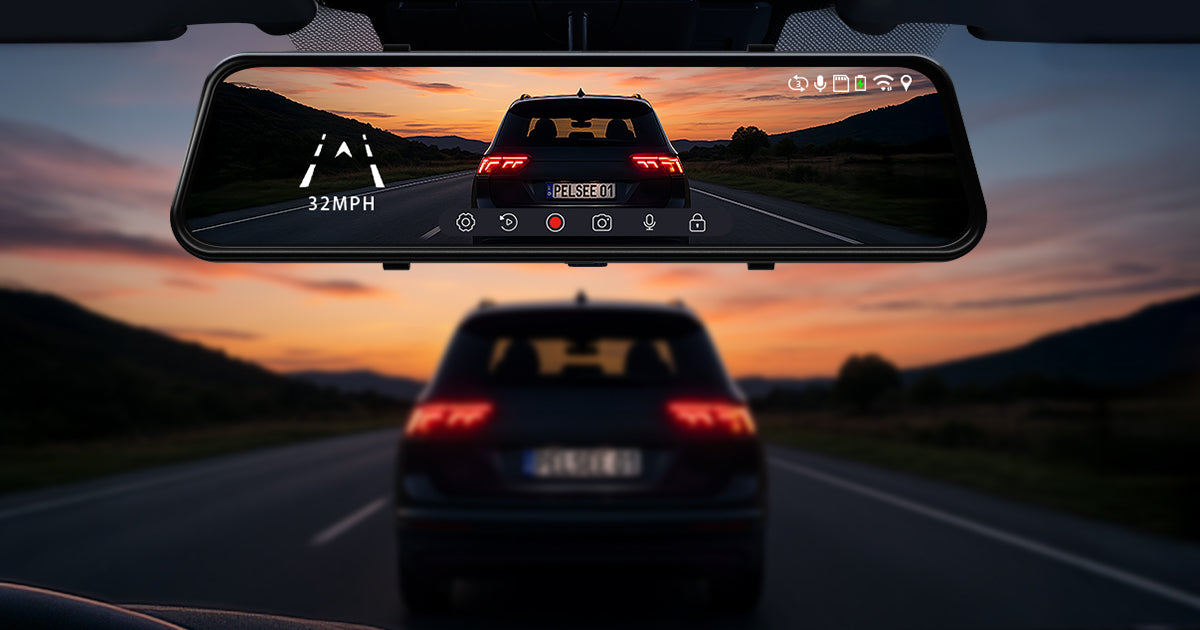
Mirror dash cams can be especially helpful for drivers who want a larger display for rear visibility. The Pelsee P12 Plus Mirror Dash Cam offers a large mirror-style display with integrated front and rear recording, making it a practical choice for RV and camper drivers who need better rear visibility on the road.
Traditional Dash Cam Benefits
A traditional dash cam may offer:
-
Smaller design
-
More discreet installation
-
Easier front camera placement
-
Less screen distraction
The best choice depends on your vehicle size, visibility needs, and installation preference.
For RVs, campers, and long vehicles, many drivers prefer systems with strong rear camera support and a larger display.
Best Dash Cam Features for RVs, Campers and Long Vehicles
When choosing the best dash cam for RVs and campers, prioritize these features:
-
Front and rear recording
-
Long rear camera cable support
-
High-resolution video
-
Strong rear camera quality
-
Wide viewing angle
-
Night vision
-
GPS tracking
-
Parking Mode
-
Loop recording
-
G-Sensor protection
-
Large memory card support
-
Wi-Fi or app access
-
Heat resistance
-
Reliable installation
The right combination of features can help make long-distance travel safer, clearer, and more secure.
Dash Cam for RVs
An RV dash cam should focus on wide coverage, reliable recording, and long rear camera support.
Because RVs are large and often used for long travel, front and rear recording is strongly recommended.
Look for:
-
Large storage support
-
GPS tracking
-
Parking Mode
-
Clear rear camera footage
-
Strong low-light performance
Dash Cam for Campers
Camper drivers often travel through rural roads, campgrounds, highways, and scenic routes.
A dash cam for campers should be easy to use and reliable during both driving and parking.
Important features include:
-
Front and rear recording
-
Night vision
-
Parking Mode
-
App access
-
High-endurance memory card support
Dash Cam for Long Vehicles
Long vehicles need extra attention to rear visibility and cable length.
Before buying a dash cam for a long vehicle, confirm:
-
Rear camera cable length
-
Rear camera mounting options
-
Power cable routing
-
Storage capacity
-
Rear camera image quality
A system designed only for compact cars may not be suitable for longer vehicles.
Frequently Asked Questions About RV Dash Cams
What is the best dash cam for RVs?
The best dash cam for RVs should include front and rear recording, long rear camera cable support, strong video quality, GPS tracking, Parking Mode, and large memory card support.
Do RVs need front and rear dash cams?
Yes. Front and rear recording is highly recommended for RVs because long vehicles have larger blind spots and limited rear visibility.
How long should a rear camera cable be for an RV?
The required length depends on the vehicle size and cable routing path. Always measure your vehicle before buying and allow extra length for hidden cable routing.
Is a mirror dash cam good for RVs?
A mirror dash cam can be useful for RVs because it provides a larger display and can improve rear visibility when paired with a rear camera.
Do campers need Parking Mode?
Parking Mode can be useful for campers parked at campgrounds, RV parks, rest stops, and public parking areas.
What size SD card is best for RV dash cams?
For RVs and long drives, 256GB is often recommended. For 4K front-and-rear recording or extended travel, 512GB may be useful if supported.
Is 4K worth it for RV dash cams?
A 4K dash cam can be worth it for RV drivers who want clearer details, better license plate visibility, and stronger video evidence.
Can dash cam footage help with insurance claims?
Dash cam footage may provide supporting evidence during insurance claim investigations, depending on the quality, relevance, and circumstances of the footage.
Final Thoughts
Choosing the best dash cam for RVs, campers, and long vehicles is about more than video resolution.
Long vehicles need wider coverage, stronger rear camera support, reliable storage, and features that can handle long-distance travel.
For most RV and camper drivers, the best dash cam setup should include front and rear recording, good night vision, GPS tracking, Parking Mode, a high-endurance memory card, and enough rear camera cable length for proper installation.
Whether you are driving across the country, visiting campgrounds, towing a trailer, or exploring scenic routes, a reliable dash cam can help document the journey and protect your vehicle when it matters most.
For long vehicles, better coverage means better confidence on the road. Browse the full Pelsee dash cam lineup to find the right model for your RV, camper, or long vehicle.
Share:
Why a Parking Mode Dash Cam is Essential for Every Driver
Pre-Order the Pelsee P1 Pro – Your Next-Gen 4K Dual Dash Cam Is Here